Case Study: KivutPois.fi
How to turn an invisible website into a local market leader—without spending a dime on ads
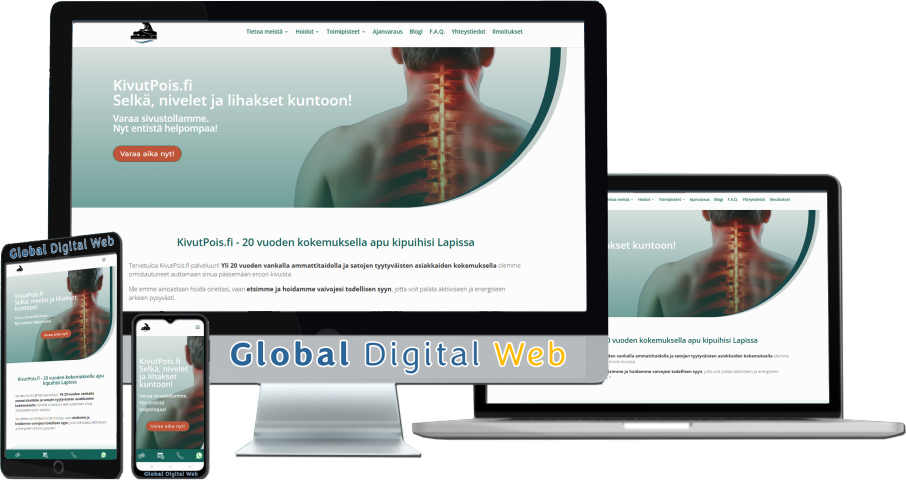
Website design and development of kivutpois.fi: Global Digital Web by Roberto Bianchi
I’m Roberto Bianchi, owner of Global Digital Web. I was contacted by a Finnish clinic with an excellent healthcare service, but they were completely invisible online.
Their potential patients were searching for “osteopaatti Kemijärvi” on Google, and they were stuck on page five. What you see here is the KivutPois.fi website (Fysioterapia Atlas AY) as it was in April 2025, before I stepped in.
ATTENTION!
You’re reading the technical version of this case study
This article contains an in-depth analysis for developers, digital marketers, and anyone who cares about data. You’ll find precise metrics, implementation details, and the reasoning behind every technical decision.
Looking for a more strategic, business-focused overview? Read the simplified version here.
How we improved KivutPois.fi
- Performance: From 46/100 to 99/100 on Google PageSpeed (yes, really)
- Ranking: From invisible to #1 position for “osteopaatti Kemijärvi”
- Accessibility: From 62/100 to 100/100
- Outcome: Eliminated the need for Google Ads, became the local market leader
The disastrous starting point
The first issue with KivutPois.fi was obvious. The website was a complete mess.
When a potential patient searched for "osteopaatti Kemijärvi" on Google, not only did they fail to appear in top results—they were buried on page five, which is essentially digital oblivion.
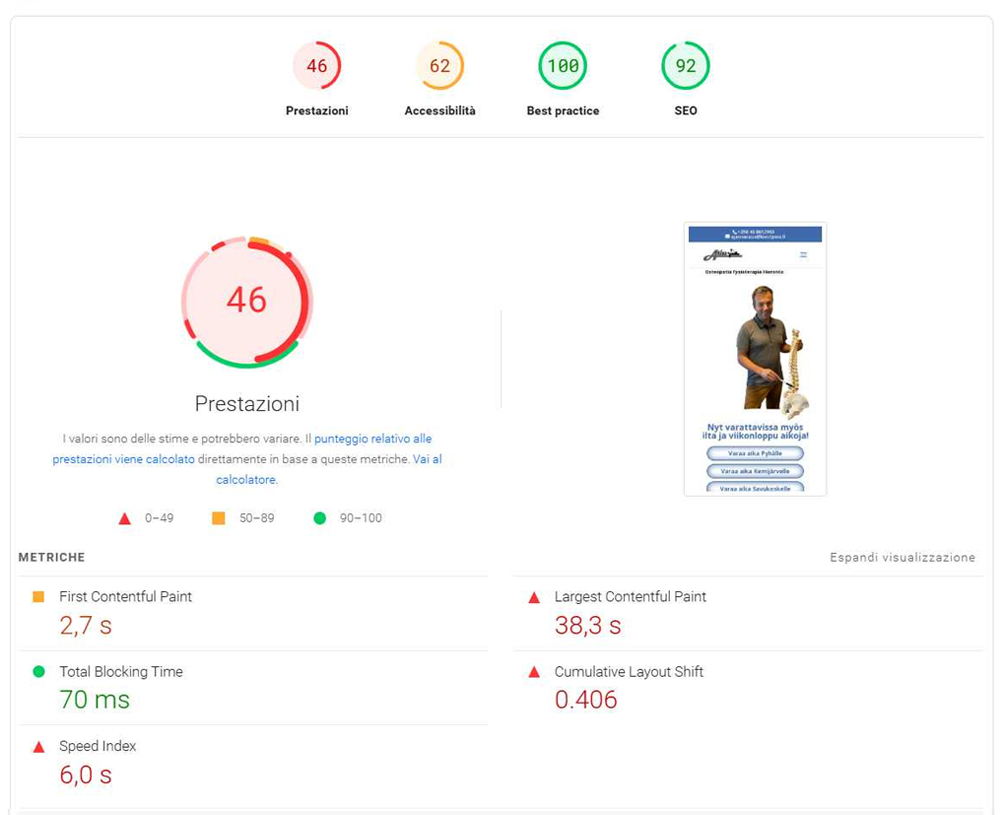
The problems went far beyond rankings. The site had a performance score of just 46/100 according to Google PageSpeed Insights.
Accessibility was stuck at 62/100, meaning roughly 4 out of 10 users with visual, motor, or cognitive impairments couldn’t even use the site properly. In healthcare, that’s unacceptable.
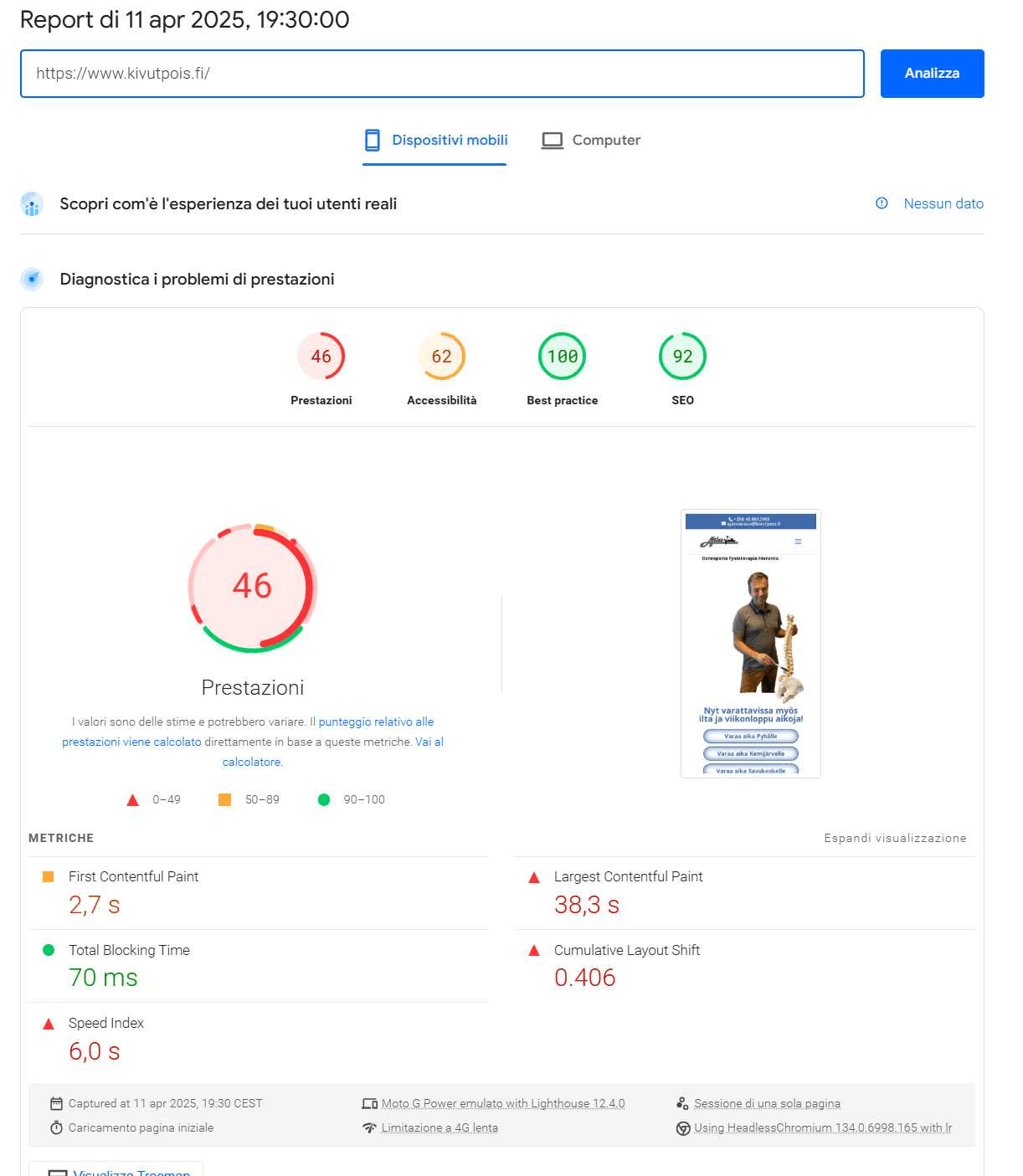
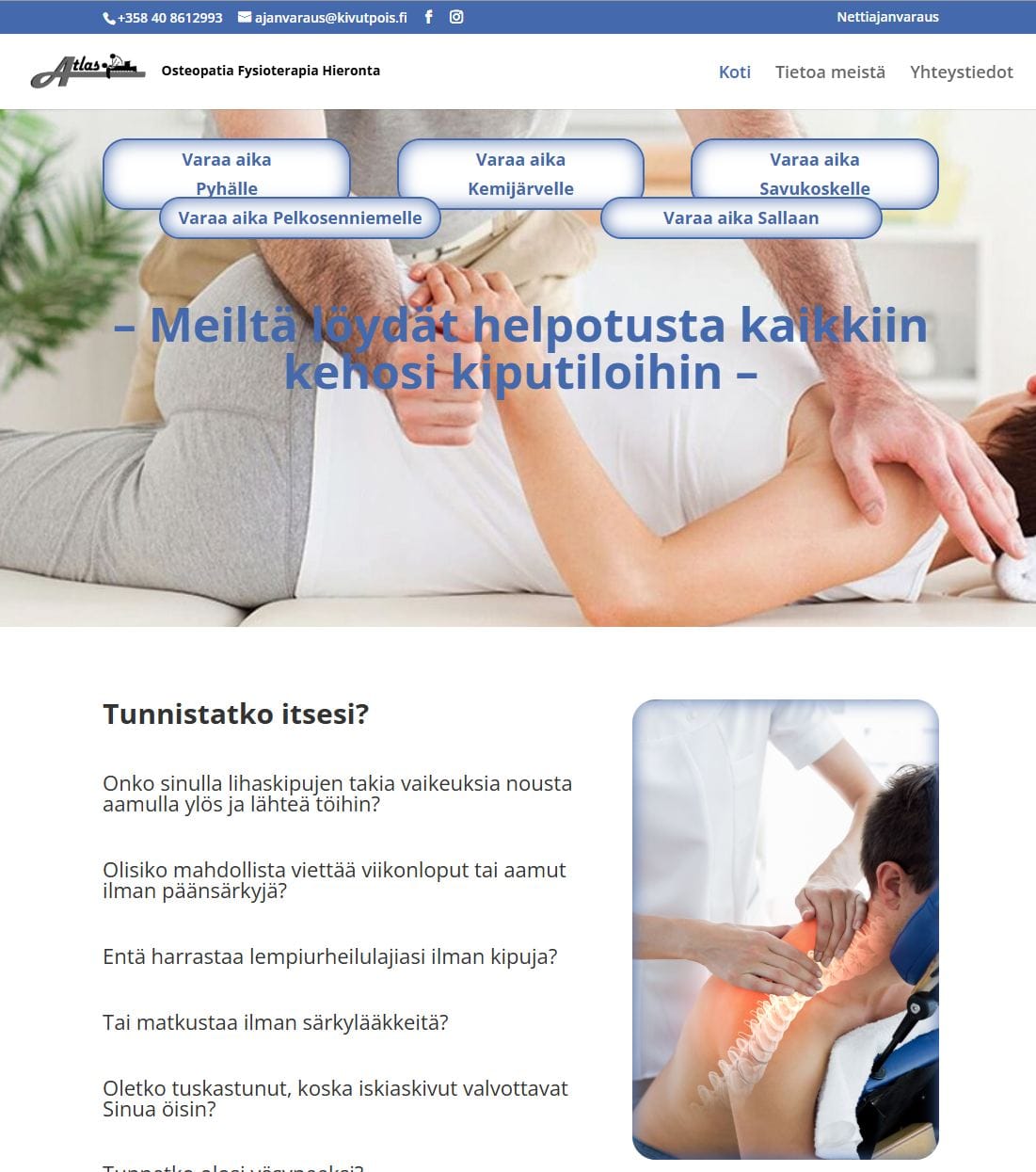
The image above shows the old version of the KivutPois.fi website, which is still available via the Internet Archive (Wayback Machine). If you’d like to see how it was, click here.
KivutPois.fi – Initial Problems
Strategic analysis: why the site comes before ads
When KivutPois.fi reached out, their initial request was: Can you run Google Ads to bring in more patients?
My response caught them off guard: "As a professional, I don’t recommend it.
Spending €1,000/month on ads to drive traffic to a broken site that makes users leave in 5 seconds is pointless. Fix the site first—then evaluate ads."
The strategy I proposed was to turn the website into a high-performing asset, so they wouldn’t need paid advertising at all.
To achieve this, I implemented high-level semantic JSON-LD graphs, connecting people, services, expertise, and real-world experience—sending strong E-E-A-T signals to Google.
I also introduced experimental GEO (Generative Engine Optimization) attributes to provide clear signals to LLMs (AI systems like ChatGPT, Gemini, Perplexity) about content structure and meaning.
Brand transformation
From torture device to symbol of care
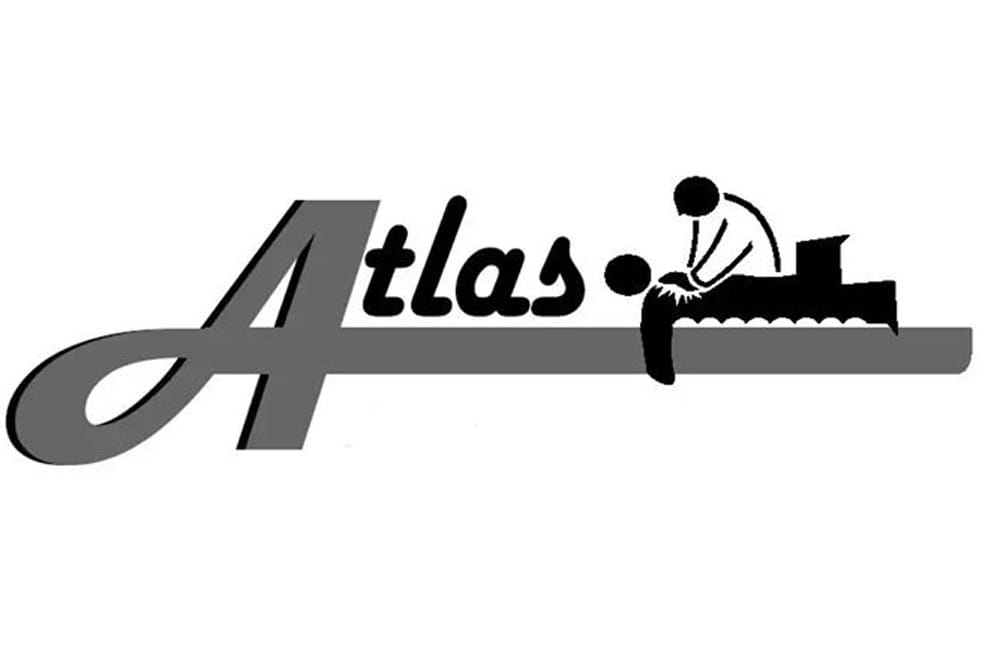
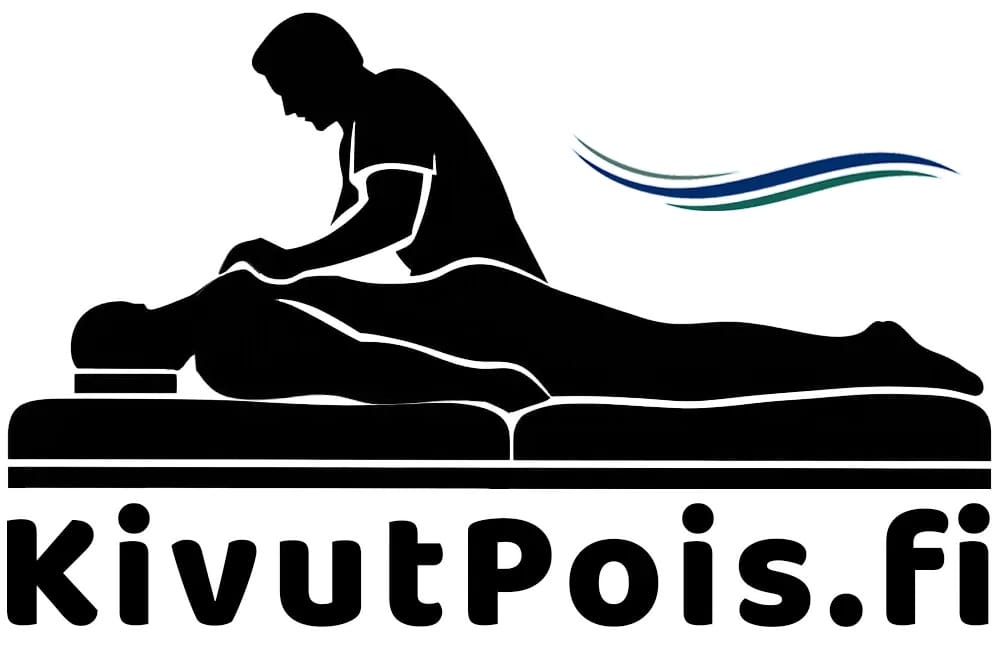
The first shock came when I saw their original logo. The clinic provides osteopathic and therapeutic treatments, but unfortunately the logo looked like a patient being tortured on a medical table.
The visual showed a human figure in visible distress during treatment.
For a physiotherapy and osteopathy clinic, this was a complete communication failure.
I completely redesigned the visual identity
The first step was to create a new logo with soft, rounded lines to evoke relaxation.
- New logo: Clean, modern shapes that communicate relaxation and professionalism
- Color palette: Calming blue-green tones instead of the original “hospital-style” colors
- Dynamic swoosh: A fluid element representing movement and well-being
- Professional favicon: Replaced the improvised icon with a recognizable symbol
Scroll the side panel in the picture above to see the before and after.

The new KivutPois.fi logo for favicon and social media
Video to humanize the brand
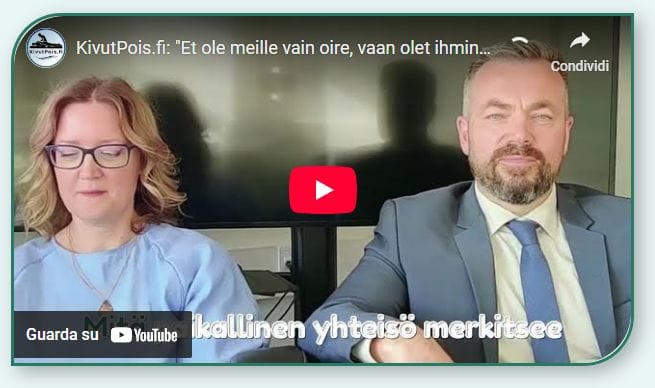
One of the most effective improvements was creating three custom video interviews to introduce the medical staff.
Instead of static text bios, patients can see and hear Denis and Valeria explain their approach to care.
Each video was produced in two formats: 16:9 for desktop and 9:16 for mobile, with automatic device detection to display the correct version.
The Technical Side
The technical side was completely rebuilt. I rebuilt the entire site from the ground up, fixing the foundation and addressing every critical issue.
The first step was switching servers: from the old hosting setup to an optimized Hostinger cloud server for WordPress. That alone significantly improved response times and overall stability.
Then I implemented 14 custom code snippets to optimize key areas.
I also configured the site to have:
- LiteSpeed Cache: pages now load much faster
- QUIC.cloud CDN: content is delivered from servers closer to the user
- WebP images: lighter images with the same visual quality
- Dynamic structured data: clearer content signals for Google
Structured Data
I built three automated scripts to generate structured data for:
- Services ("hoidot"): helps Google better understand the treatments offered
- Dynamic FAQs: increases the chances of appearing with direct answers
- Blog: each article communicates with Google through a JSON-LD created diunamically in a structured way
La footbar mobile

On mobile, every extra step is friction. If users have to hunt for a phone number or booking link, chances are they’ll drop off.
That’s why I built a mobile footbar: a persistent bar at the bottom of the screen designed for instant actions.
With just one tap, users can:
- Book an appointment
- Call the clinic
- Send a pre-filled WhatsApp message
- Manage privacy consent preferences
Booking System
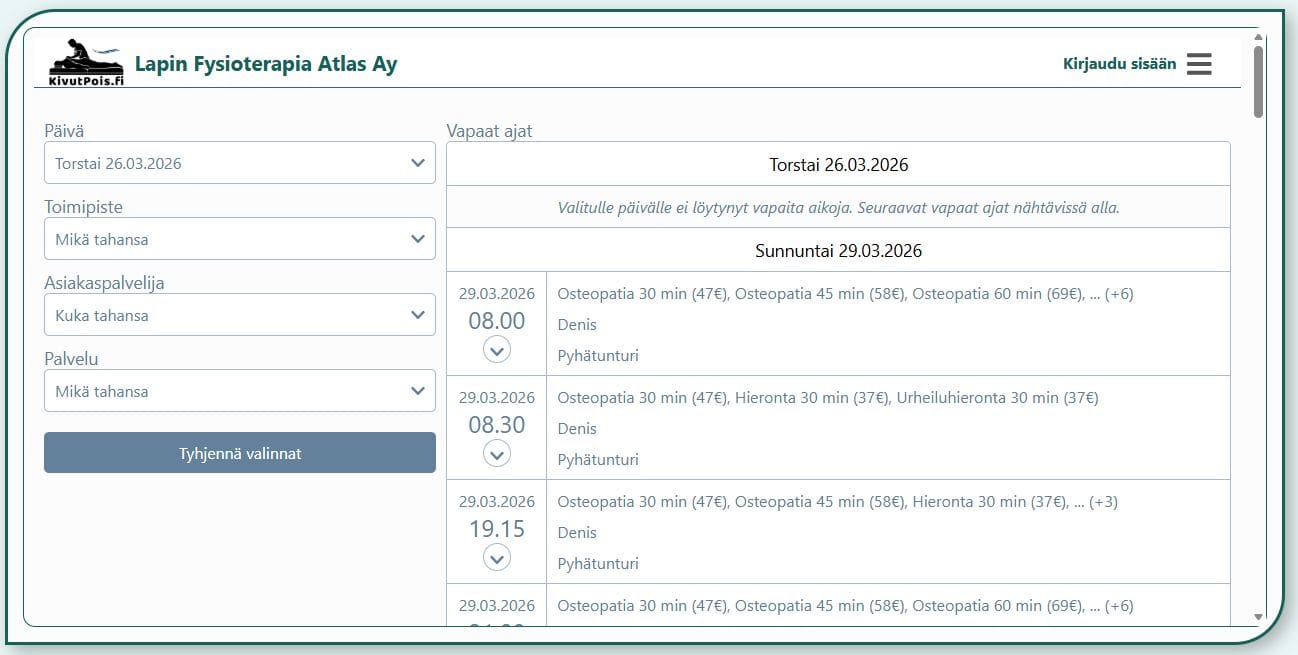
On the original site, patients were redirected to an external platform (timma.fi) to book appointments. That kind of handoff creates unnecessary drop-off. I integrated the booking system directly into the website, keeping everything visually consistent with the brand.
Now patients can:
- Browse available services
- Choose a practitioner
- Book without leaving the site
- Receive confirmation via email
Results You Can Actually See
In April 2025, the kivutpois.fi brand, associated with Fysioterapia Atlas AY, had no presence on Google.
The new site went live on September 15, 2025.
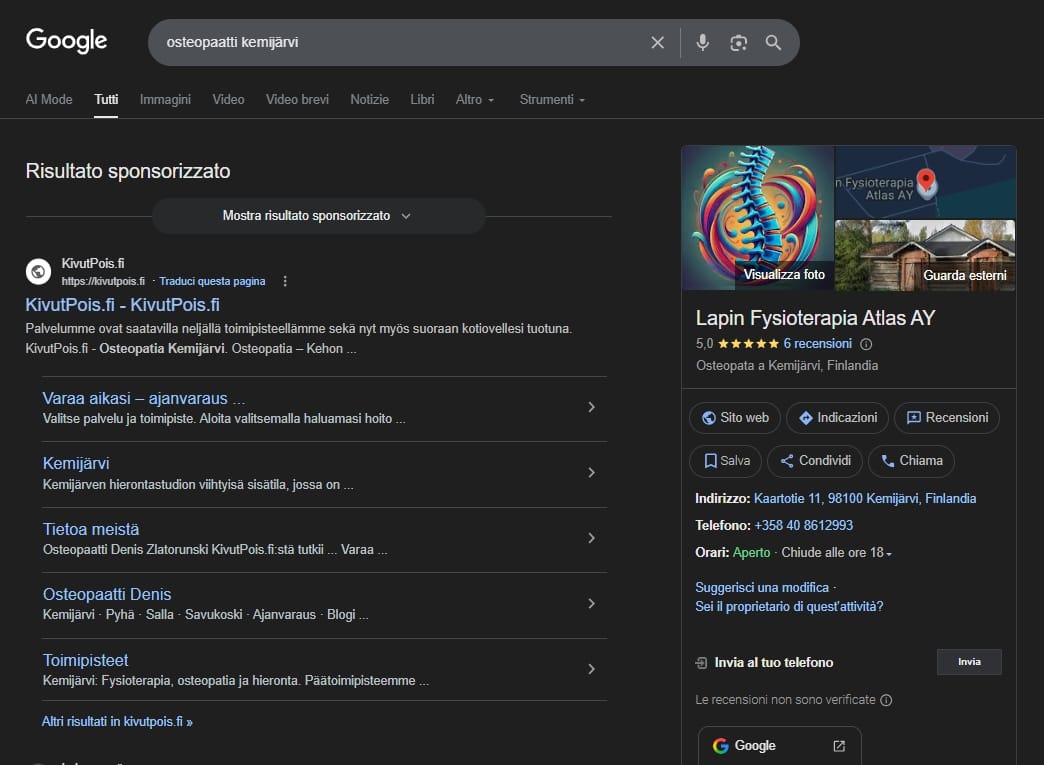
Searching for "osteopaatti Kemijärvi"—as shown in the screenshot above (anyone can verify this on Google)—the site reached the #1 position and now dominates a large portion of the results page, including visibility for Fysioterapia Atlas AY.
Beyond the organic result, you also get:
- Sitelinks to main sections
- A Knowledge Panel with business info
- Informational boxes
- An “Other results” section from the same site
Metrics
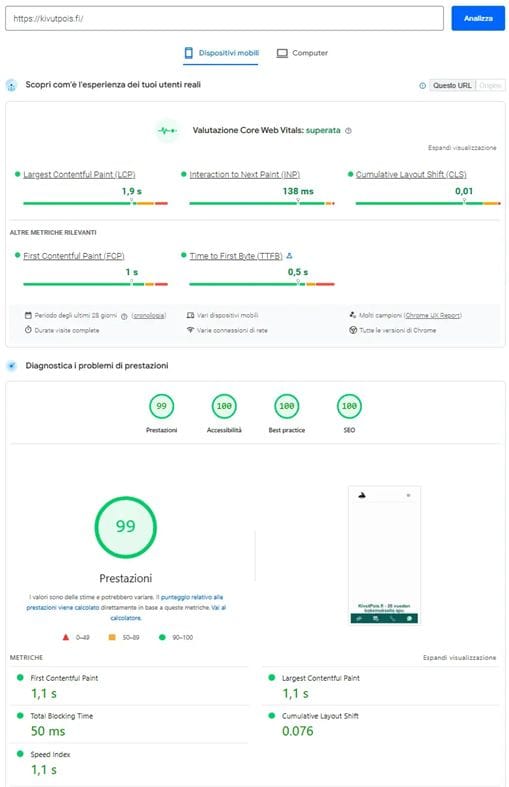
Mobile:
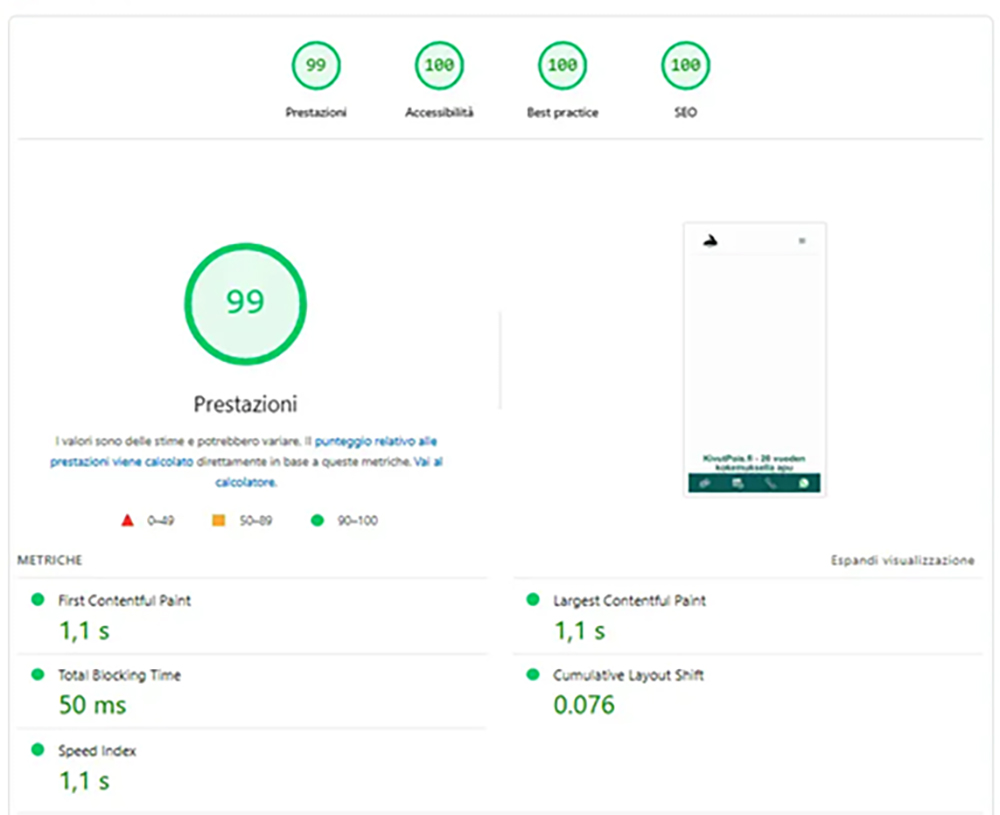
- Performance: 48 -> 99
- Accessibility: 62 -> 100
- Best Practices: 100 -> 100
- SEO: 92 -> 100
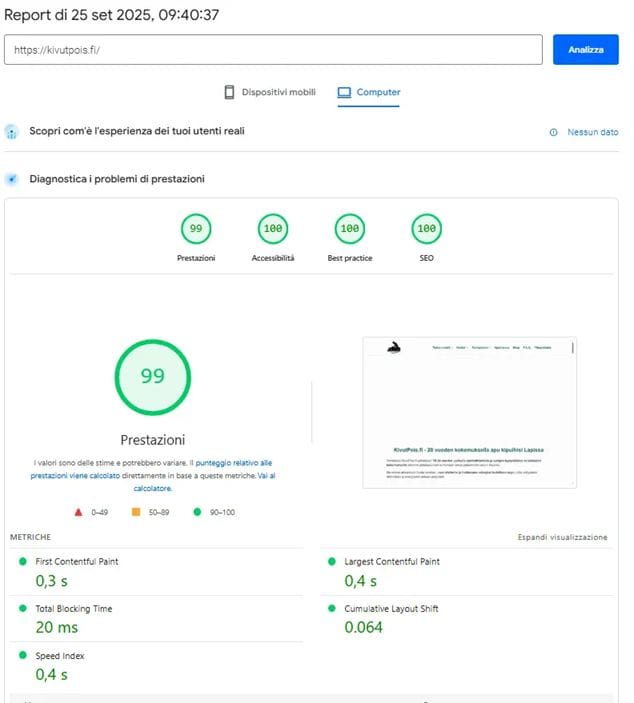
Desktop:
- First Contentful Paint: 0.3 s
- Largest Contentful Paint: 0.4 s
- Total Blocking Time: 20 ms
The site now meets extremely high performance standards across the board.
In the images below, scroll the sidebar to compare the site metrics for kivutpois.fi in April 2025 and September 2025 after the rebuild.
Content Strategy & Newsletter
Alongside the technical work, I also set up a content strategy:
- Blog: articles optimized with structured data
- MailerLite newsletter: double opt-in system
- Automated TOC: the blog uses a PHP-based system that structures content and makes it easier to read for both users and Google
- Custom JS & PHP: the site includes several tailored optimizations. One example is a dynamic announcement system—update the text in one place, and it automatically updates across every page where that section appears.

AI Citation Graph
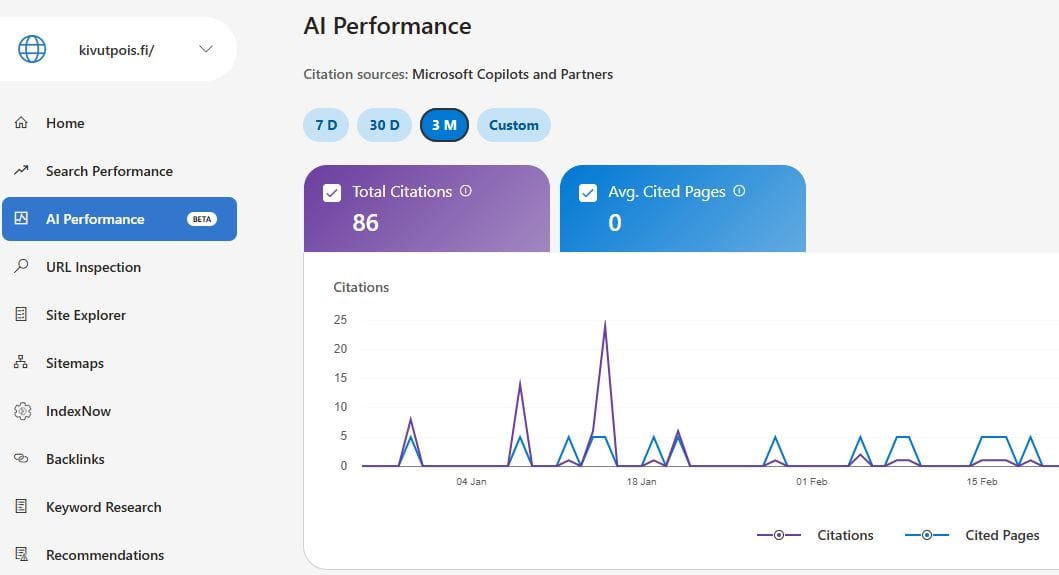
As shown in the chart above, the site is regularly cited by ChatGPT.
Traffic from ChatGPT is roughly one-tenth of what comes from Google’s AI Mode—but Google hasn’t released official tools yet to track AI citations.
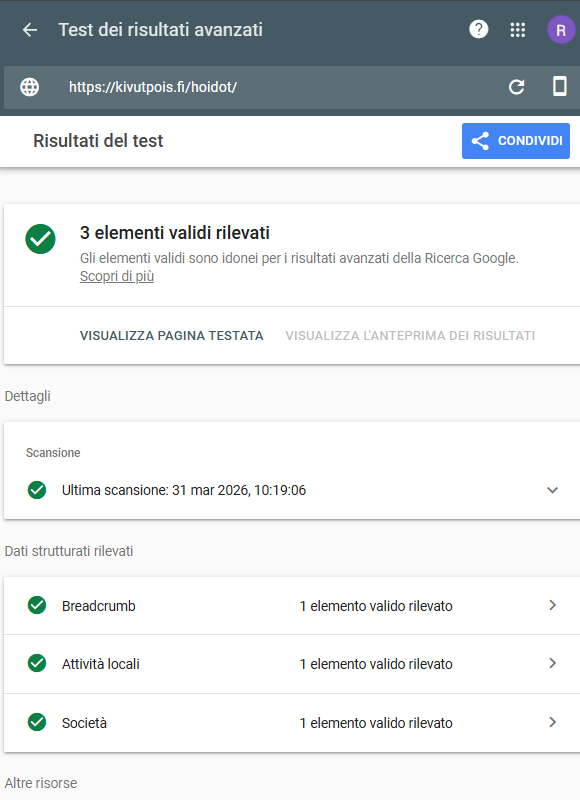
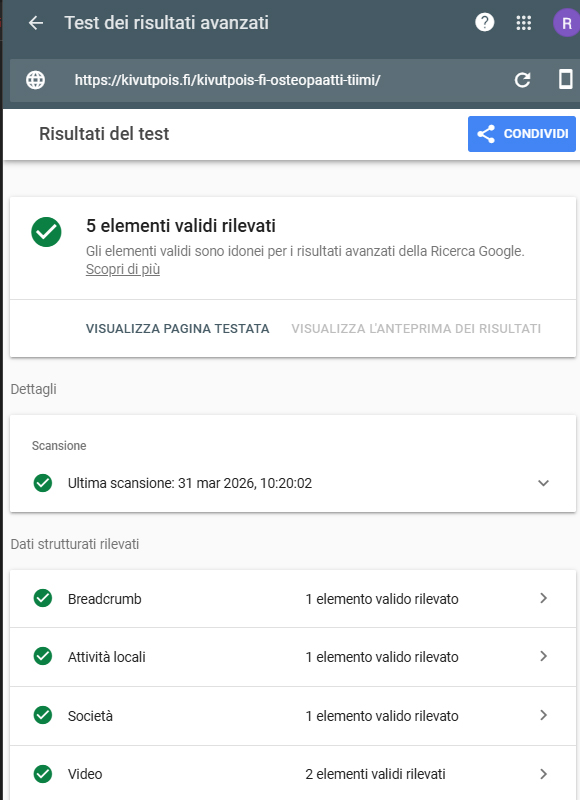
Validated Structured Data
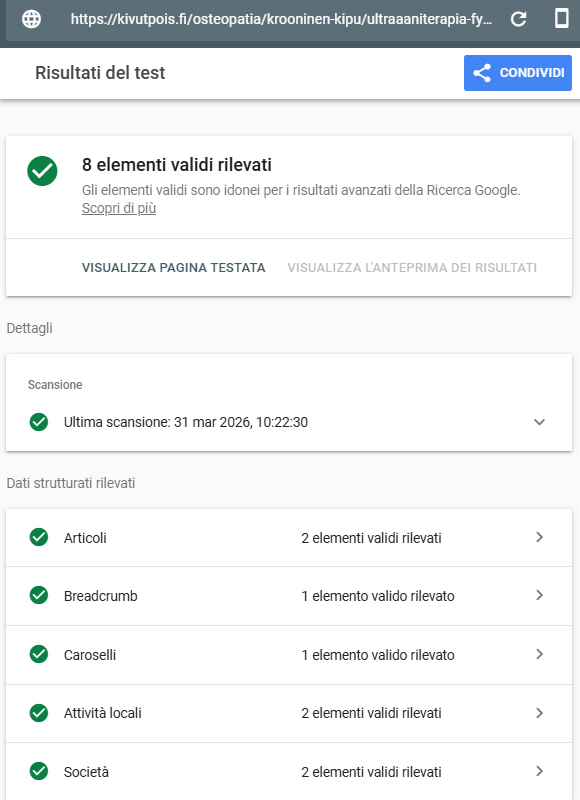
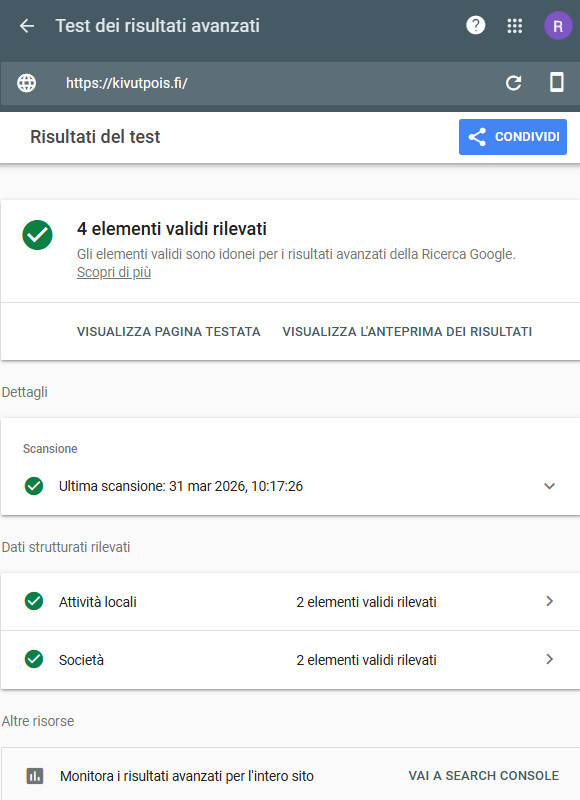
Below you can see screenshots of structured data validated through Google Rich Snippets.
Pay special attention to the structured data in blog articles, which is dynamically generated via a PHP script.
Answers to Your Questions
How long did it take to see the first results?
Performance improvements were immediate after launch on September 15, 2025. Rankings on Google started improving within the first few weeks, with top position achieved within the first month.
Why didn’t you just run Google Ads instead of rebuilding the site?
Google Ads can get expensive in a local medical niche. An optimized website, on the other hand, works for you 24/7 for years at no ongoing cost. Think of it like the difference between renting and owning a home.
What happens if a competitor copies the same strategy?
Can this result be replicated in other industries?
Absolutely—especially for local businesses with weak or low-quality digital competition.
Most competitors are running sites with performance scores in the 40–60/100 range, leaving a huge opportunity for those who know how to optimize properly.
What does ongoing website maintenance include?
Ongoing work includes regular content updates (blog), performance monitoring, and SEO adjustments. The technical foundation remains stable for years once it’s properly optimized.
How much does a project like this cost?
The investment depends on the complexity of the existing setup and the goals. It typically starts at around €750/month to get solid results. The ROI is usually in the 300–500% range starting from the second year for local businesses, based on customers acquired organically instead of through paid ads.
What is GEO and how does it work?
GEO (Generative Engine Optimization) is a still experimental technique that’s already being used by LLMs.
If you want to dive deeper, I wrote this article that breaks it all down in detail. It’s structured across three levels of technical depth so anyone can follow along.
Key Takeaways
- An optimized website eliminates the need for Google Ads and brings in clients 24/7 at no cost
- Technical performance is critical: going from 48/100 to 99/100 means moving from a broken setup to true top-tier performance
- Brand identity directly impacts conversions: a professional logo signals credibility
- System integration reduces drop-off: on-site booking vs. sending users to external platforms
- Structured data helps your site “speak” to Google in its preferred language
- Investing in technical quality creates compounding advantages: more authority = more traffic = more patients = stronger rankings
This case study shows how a well-executed digital strategy can turn an invisible healthcare business into the clear leader in its local market—completely eliminating ad spend while building a long-term competitive edge.
Want to achieve the same results for your business?
Interested in a tailored strategy consultation?